

Ordering the wrong zipper gauge is one of the most expensive mistakes in hardware sourcing. Order a #3 zipper for a heavy-duty duffel bag and the teeth snap within weeks. Order a #10 for a lightweight dress lining and the bulk ruins the garment drape. This guide breaks down every common zipper size — from delicate #3 to industrial #10 — so you can match the gauge to your product's actual load requirements before placing a purchase order.
What Do Zipper Gauge Numbers Actually Mean?
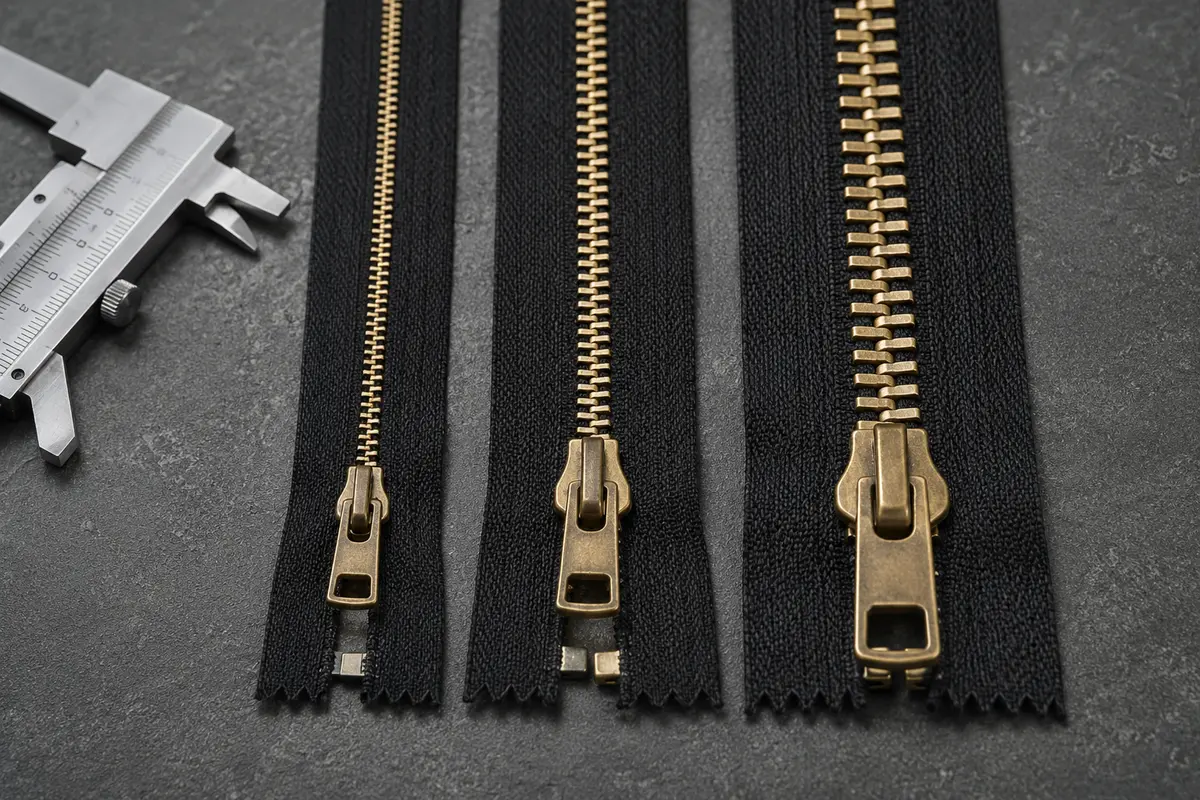
The gauge number — #3, #5, #7, #8, #10 — represents the approximate width of the closed zipper teeth in millimeters. A #5 zipper has teeth roughly 5mm wide when closed. But the number tells you much more than just width: it correlates directly with tape width, tooth thickness, crosswise strength, and pulling endurance.
While there is no universal ISO standard that rigidly maps gauge to exact dimensions (manufacturers may vary by ±0.3mm), the industry follows consistent conventions. Knowing these conventions lets you compare quotes across suppliers and catch specification mismatches before sampling.
Quick Reference: Zipper Gauge vs. Key Specifications
| Gauge | Teeth Width | Tape Width | Typical Crosswise Strength | Best For |
|---|---|---|---|---|
| #3 | ~3.0mm | 12mm | 250-350N | Dresses, blouses, linings, small pouches |
| #5 | ~5.0mm | 15-18mm | 400-600N | Jackets, handbags, backpacks, tents |
| #7 | ~7.0mm | 20mm | 600-800N | Luggage, heavy coats, boat canvas |
| #8 | ~8.0mm | 22-25mm | 800-1000N | Large luggage, outdoor gear, military |
| #10 | ~10.0mm | 25-30mm | 1000-1400N | Industrial covers, heavy canvas, marine |
* Strength values are typical for metal-tooth zippers. Nylon coil zippers may show 15-25% lower values at the same gauge. Always request supplier test reports per QB/T 2171/2172/2173.
How Gauge Affects Zipper Performance Across Teeth Types
The same gauge number performs differently depending on the teeth material:
- Metal teeth (brass / aluminum / zinc alloy): Deliver the highest crosswise strength at any given gauge. A #5 metal zipper can withstand roughly 500-600N of lateral force — about 40% more than a #5 nylon coil of the same width. Metal is the go-to for luggage, jeans, and heavy-duty applications where the zipper must stay closed under tension.
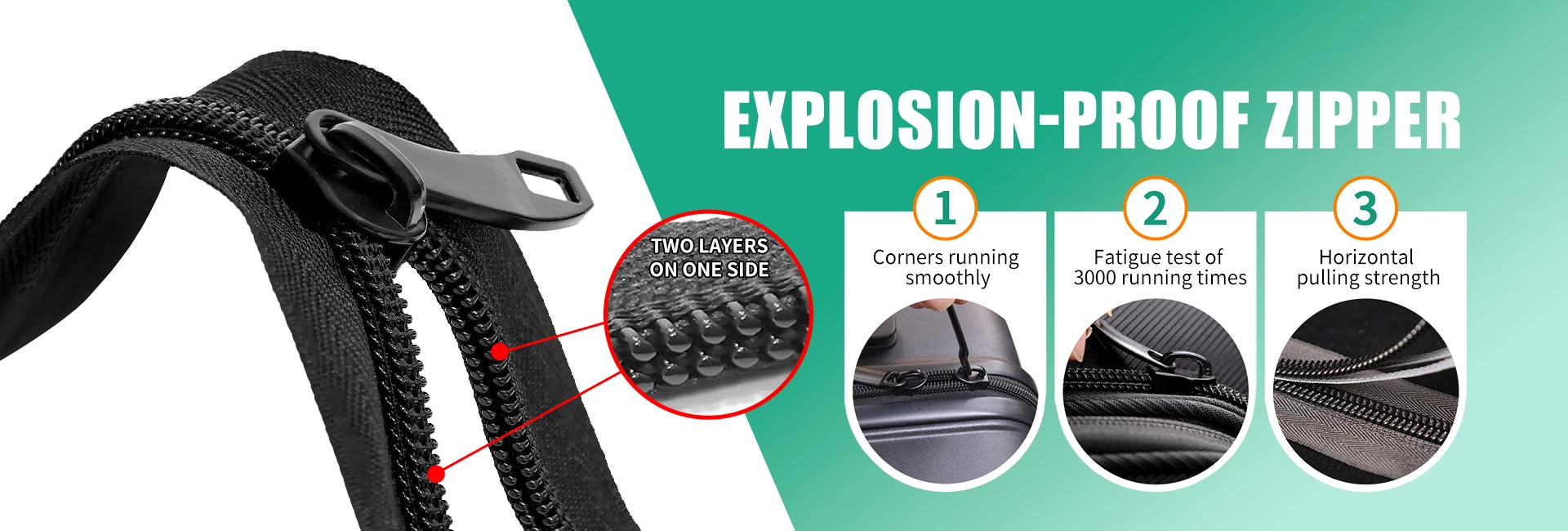
- Nylon coil (continuous spiral filament): More flexible and lighter than metal at the same gauge. A #5 nylon zipper is ideal for lightweight jackets and bags where you need smooth operation without weight penalty. The coil structure provides natural self-healing — if one loop deforms, adjacent loops maintain closure.
- Plastic / Resin molded teeth (POM injection): Sit between metal and nylon in strength. A #5 resin zipper offers a good balance of durability and smooth glide for mid-weight applications like backpacks and sportswear. Resin teeth are also the most color-customizable option.
⚡ Pro Tip: When comparing quotes, always ask suppliers to state the test standard behind their strength claims. Chinese manufacturers typically test to QB/T 2171 (metal), QB/T 2172 (nylon), or QB/T 2173 (plastic). Crosswise strength measured under different standards is not directly comparable.
Application-Based Selection: Match the Gauge to the Product
Garments & Fashion
#3: Ideal for dress side seams, blouse plackets, skirt openings, and lightweight linings. The narrow tape (12mm) stays hidden and won't create visible bulk through thin fabrics.
#5: The workhorse for jackets, coats, hoodies, and jeans fly fronts. Wide enough for reliable daily use without being visually obtrusive.
Bags & Luggage
#5: Suitable for handbags, crossbody bags, and small backpacks where the zipper carries moderate daily load.
#7 / #8: Essential for checked luggage, large duffel bags, and heavy-duty tool bags. At these gauges, the teeth can survive the lateral stretching that occurs when an overpacked bag is forced shut.
#10: Reserved for industrial equipment cases and extreme-duty cargo bags.
Outdoor & Marine
#7 / #8: Required for tent doors, boat canopy enclosures, and awning panels. These applications demand not just static strength but repeated opening/closing endurance under wind load. #10: Recommended for marine canvas that must withstand salt spray and constant tension.
Common Sourcing Mistakes to Avoid
- Choosing gauge by price alone. A #5 zipper might be cheaper per meter than a #7, but if your product needs #7-level crosswise strength, the warranty returns from broken zippers will erase any upfront savings.
- Ignoring tape width. A wider tape (20mm vs 15mm for the same #5 gauge) provides a larger sewing margin and better load distribution into the fabric — critical for stretchy or loosely woven materials.
- Not matching slider to gauge. A #5 slider on a #7 chain will jam or skip. Always confirm that the slider body marking matches the chain gauge. Mixed-gauge assemblies are the #1 cause of zipper failure in bulk orders.
- Overlooking environmental factors. If your product faces UV exposure (outdoor gear, boat covers), specify UV-stabilized nylon tape and corrosion-resistant metal teeth (nickel-plated brass or stainless steel). Standard zinc-alloy teeth degrade rapidly in marine environments.
Need Help Specifying Your Zipper?
Browse our complete zipper catalog organized by gauge to compare metal, nylon, and resin options side by side. Each product page includes detailed specifications with crosswise strength test data to help you make a confident sourcing decision.
Explore Zipper Catalog by Gauge →